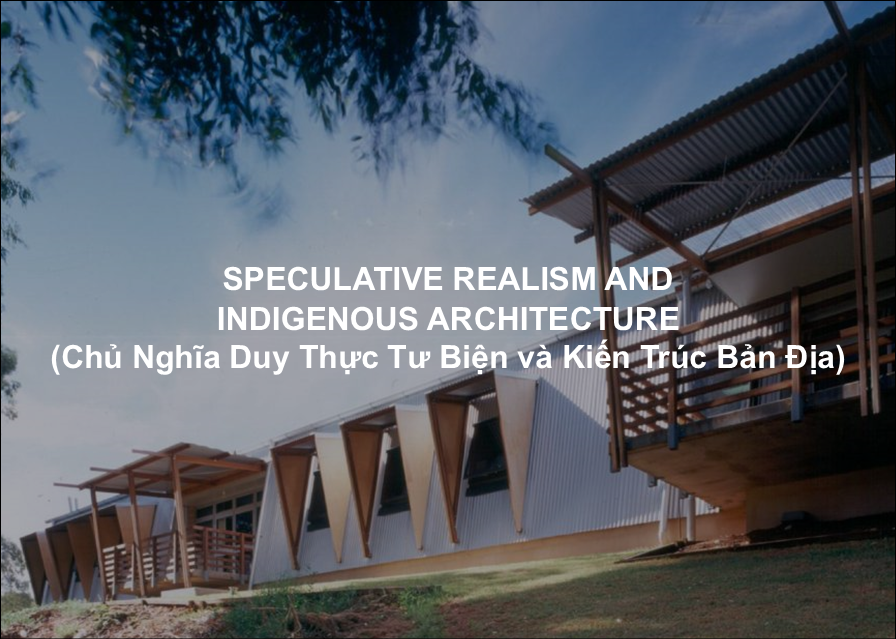
SPECULATIVE REALISM AND INDIGENOUS ARCHITECTURE
Speculative Realism is a contemporary philosophical movement that emerged in the late 2000s, characterized by its critique of the dominant trends in post-Kantian philosophy, especially correlations, with the idea that humans can only know the relationship between thought and reality, but not reality itself. Instead of focusing on human experience and subjectivity, speculative realists argue for a philosophy that acknowledges the reality of the world independently of human perception (Harman, 2019). Key figures in Speculative Realism, such as Quentin Meillassoux, Graham Harman, and Ray Brassier, propose a range of theories that share this common theme of overcoming anthropocentric limitations. Founder of Object-Oriented Ontology (OOO), Harman (Harman, 2018) argues that objects exist independently of their relations, focusing on the autonomy and withdrawal of objects from human perception or interaction. Harman’s OOO insists that objects have their realities, separate from how humans engage with them (Mitrović, 2020). This concept disrupts the traditional human-centered approach to philosophy and opens possibilities for understanding architecture as a domain where materials, spaces, and environments have significance outside of human use or interpretation.
Besides, Quentin Meillassoux (Meillassoux, 2008) opposes correlationism and promotes what he terms “speculative materialism,” which contends that the universe is contingent and not constrained by any necessity. Although associated with Speculative Realism, Ray Brassier’s work emphasizes nihilism and the death of meaning, rejecting metaphysical optimism while maintaining that reality exists independent of human thought. Iain Hamilton Grant’s work centers around the importance of nature and metaphysics in Speculative Realism, building on ideas from German idealism and post-Kantian thought (C. Johns, 2024).
According to John (2023) aims to situate Hegel within a historical context that bridges analytic and continental philosophy, showing that his focus on fundamental ontological questions aligns with Speculative Realism. British Idealists were influenced by Hegel, and both his work and Speculative Realism share a concern with the nature of reality and material existence. Speculative realists like Harman, Meillassoux, Brassier, and Grant develop their concepts such as “withdrawn” and “hyper-chaos” which, while diverging from Hegel’s idealism, still connect with his ideas on non-being and objective relations. Finally, it reinterprets correlationism, central to Speculative Realism, through a Hegelian lens, suggesting it can be viewed as a radical relation between being and non-being or a thesis on alternative correlates beyond Hegel’s triadic ontology – Being, Non-Being and Becoming (C. W. Johns, 2023).
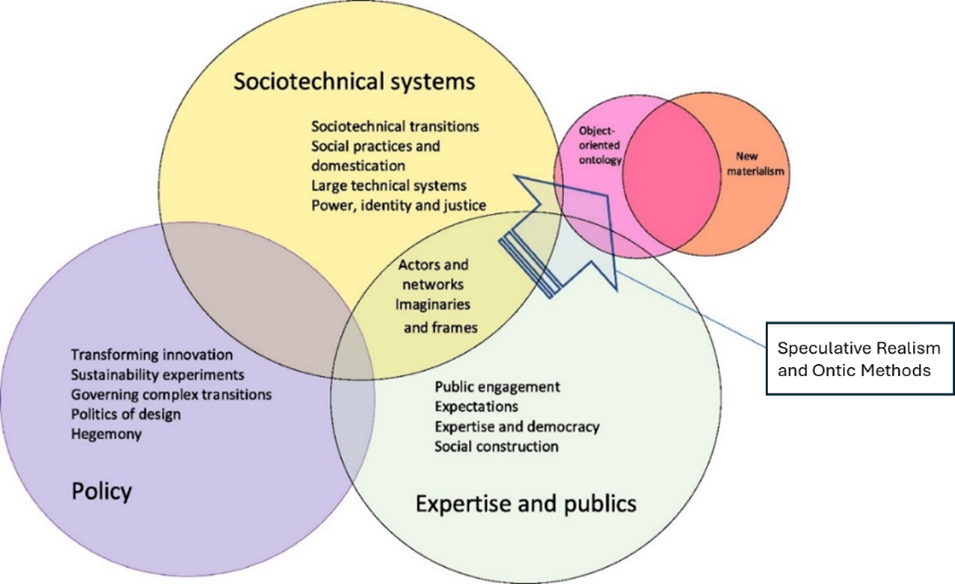
Figure 1. Speculative Realism is an ontological approach engaging the public and the study of objects (Murphy, Brereton, & O’Brolchain, 2021)
In this way, Speculative Realism compels us to rethink the role of architecture. Speculative Realism’s challenge to human-centered thought and its assertion that objects and realities exist independently of human perception. Rather than merely serving human needs or representing human ideas, buildings, and materials can be seen as active participants in a larger ecological and material system, influencing and interacting with the world in ways that transcend human intention.
Indigenous Architecture: Harmony with the Environment
Indigenous architecture is intrinsically connected to the cultural, spiritual, and environmental contexts of the communities that create it, emphasizing sustainability and the use of local materials that harmonise with the natural world. Unlike modern architecture, which often seeks to dominate or control nature, Indigenous architecture reflects a holistic approach that acknowledges the interdependence of human and non-human elements. Indigenous architecture also incorporates symbolic and spiritual meanings that reflect the community’s relationship with the cosmos, animals, plants, and the land itself. The built environment is not merely a shelter but a manifestation of the community’s worldview, seamlessly and respectfully integrating human and non-human realities.
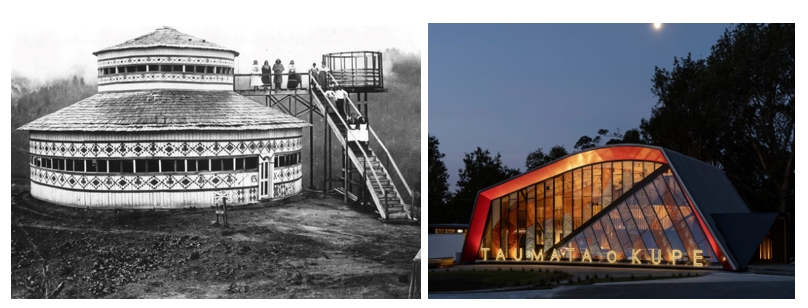
Figure 2. The Taumata o Kupe meeting house inspiring by Hīona meeting and courthouse (Source: Oliver Wainwright (2024))[1]
The socio-economic forces and cultural imperatives that influenced Māori architecture (Figure 2), both before and after colonial contact, mirror a global trend imposed on Indigenous peoples worldwide. Indigenous architecture, which was shaped by specific temporal, spatial, and cultural contexts, existed and thrived long before colonisation, as evidenced by its rich traditions. While colonisation did not create Indigenous architecture, the dominance of colonialism and the globalization of this hegemony significantly hindered its natural development. This led to a duality, where Indigenous architecture was marginalized, yet also sparked creative adaptations to address new challenges. In the post-contact era, Indigenous communities and their architects rapidly adopted colonial technologies, using them to innovate within their cultural frameworks. Despite the disruptions, Indigenous architecture has endured, evolving continuously, and today serves as a powerful example of resilience and a model for integrating Indigeneity into architecture and other design and planning disciplines (Matunga, 2018).
On the other hand, Indigenous architecture and Jan Gehl’s human-centered architecture approach urban design from distinct philosophical perspectives. Indigenous architecture emphasizes harmony with the natural environment, utilizing local materials and sustainable practices that adapt to the unique features of the landscape, such as climate and ecosystems. It is deeply rooted in cultural, spiritual, and communal values, reflecting the interconnectedness of human and non-human elements. This approach prioritizes balance and respect for nature, viewing it as an equal partner in the built environment, resonating with ideas from Speculative Realism, where objects and natural elements are valued independently of human control. In contrast, Jan Gehl’s human-centered architecture, as outlined in his book “Cities for People” (Gehl, 2013), focuses on optimizing urban spaces for human experiences, prioritizing accessibility, social interaction, and comfort. Gehl aims to create livable, people-friendly cities through designing streets, plazas, and public spaces that encourage social engagement and community well-being, with nature playing a complementary role to enhance human comfort and aesthetics.
While Indigenous architecture seeks to maintain a symbiotic relationship with nature, Gehl’s approach centers on improving urban life for people, making the human experience the core of design. Gehl’s philosophy aligns with Pragmatism and Humanism, focusing on practical solutions for everyday life and enhancing human welfare and quality of life. His approach differs from Speculative Realism and Indigenous architecture, which emphasize the independence of non-human entities and natural elements. In contrast, Gehl’s human-centered approach treats nature as a supportive element to improve the human experience, rather than viewing it as an autonomous entity as in Speculative Realism or Indigenous architecture. Nonetheless, while Gehl and Speculative Realism differ in their approach to the relationship between humans and the environment, these perspectives are not entirely contradictory and can complement each other, offering both human-focused and ecological approaches to urban design.
Overview, Speculative Realism, with its emphasis on the independent existence of the non-human world, offers valuable insights into how we can rethink architecture in the age of climate change. Indigenous architecture, which is deeply rooted in cultural and environmental awareness, provides a practical and philosophical foundation for addressing the challenges posed by a changing climate. By recognizing that materials and natural forces have their own “agency” a key idea in Speculative Realism architects can design structures that are not only human-centered but also responsive to environmental forces.
Speculative Realism and Indigenous Architecture with Climate Change
Amid the escalating environmental crisis, the relationship between humans and nature is driving a shift in architecture. Speculative Realism offers a timely framework that encourages designs addressing both human needs and ecological ethics. Philosophers like Quentin Meillassoux, who argues that “the world doesn’t revolve around human existence,” and Graham Harman, who suggests that “every object has its own value,” have inspired architects to explore new ways of integrating design with the natural world. These ideas move beyond traditional standards, emphasizing the interconnectedness of all life forms and the need to protect them, just as we protect ourselves. This approach is pushing architects to adopt more eco-friendly, sustainable practices, aiming for a vision of sustainability that extends beyond conventional green building standards. Speculative Realism encourages a deep analysis of a building’s materials, focusing on their lifecycle and long-term environmental impact. By promoting designs that prioritize full recycling or reuse, this philosophy supports a circular economy, aiming to reduce waste and sustain life on the planet for millennia rather than just a few centuries.[2]
In the face of climate change, Indigenous architectural practices, such as stilt houses and floating homes in Vietnam, exemplify how structures can be built to adapt to fluctuating weather patterns, rising sea levels, and other environmental changes. These designs have evolved over centuries, responding to natural conditions rather than resisting them. Speculative Realism pushes modern architecture to further embrace this adaptive approach by acknowledging that natural forces like floods, heat, or wind are realities that exist independently of human control and must be integrated into architectural planning.
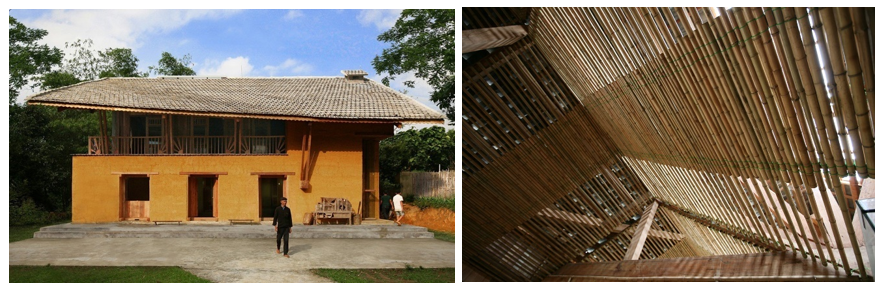
Figure 3. Nam Dam Homestay and Community House (Ha Giang, Vietnam)[3]
For example, the Nậm Đăm Community House (Figure 3) is an exemplary project that combines indigenous architecture with sustainability, reflecting the principles of Speculative Realism in response to climate change. Built using local materials like bamboo, wood, and rammed earth, the structure is both environmentally friendly and naturally adapted to the climate of northern Vietnam. These materials not only reduce the building’s ecological footprint but also enhance its resilience to the region’s weather conditions, including heavy rain and flooding. The project respects the natural environment by harmonizing with the landscape rather than imposing upon it, a core idea of Speculative Realism, where natural materials are seen as having their own intrinsic value. The house also reflects indigenous cultural values, preserving the heritage of the Dao ethnic group while incorporating modern design for climate adaptability (Linh & Thuy, 2023).
Similarly, Maloca Stilt houses are a traditional architectural form found in Vietnam, particularly among ethnic minorities in the northern and central highlands. These houses are elevated on stilts to protect against flooding and wild animals, allowing air to circulate beneath the house, which keeps it cooler in hot, humid climates. Maloca Stilt houses demonstrate an adaptive response to both seasonal flooding and temperature regulation. The steep roofs not only help with rainwater drainage but also improve airflow (Figure 4). In hot, humid climates, proper ventilation is key to maintaining cooler indoor temperatures. The design of the steep roof helps to create a natural ventilation system, allowing hot air to rise and escape through the roof, while cooler air is drawn in from below the stilted structure. This makes the house more comfortable in tropical environments without the need for modern cooling systems.
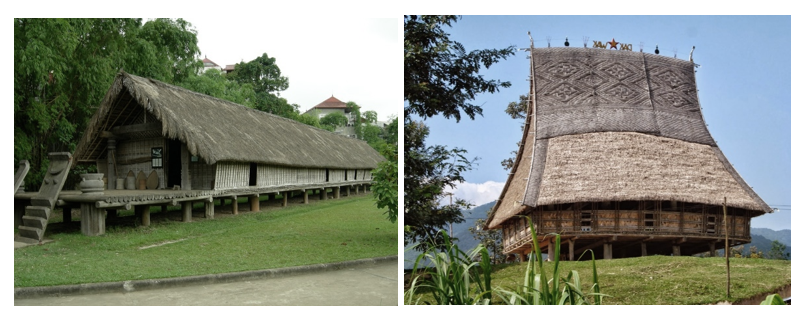
Figure 4. Nhà Rông, Nhà Dài (Central Highlands, Vietnam)
The Green School in Bali (Figure 5) uses bamboo as its primary construction material, integrating sustainability into every aspect of its design. The school operates with a minimal ecological footprint, relying on renewable energy sources such as solar power and water conservation systems (Agustin & Dwijendra, 2023). The Green School represents a forward-thinking approach to architecture that not only addresses human needs but also respects the autonomy of the environment, in line with speculative realism. From a Speculative Realism perspective, bamboo is seen as having its own “agency.” The material isn’t merely a passive element but plays an active role in the structure’s interaction with the environment. Bamboo’s growth patterns, strength, and flexibility make it a natural choice for climate resilience, especially in a tropical setting like Bali. This respects the Speculative Realist idea that objects and materials have their own value and roles, independent of human intention.
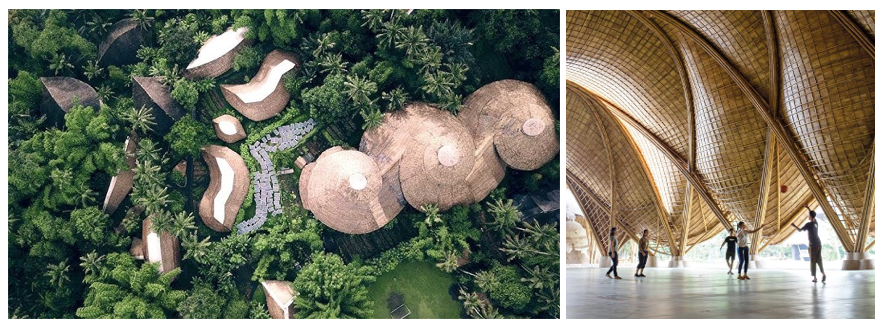
Figure 5. Green School Bali with Bamboo Structures (Indonesia)
Like many indigenous structures, the Green School is designed to work with nature rather than against it. The open-air design allows for natural ventilation, reducing the need for artificial cooling systems, and the school is integrated into the natural landscape, with minimal disruption to the surrounding environment. This reflects traditional indigenous approaches, where architecture is designed to coexist with local ecosystems rather than dominate or change them. The school’s design acknowledges the power of natural elements like rain, wind, and sunlight and adapts to them rather than attempting to control them. The building’s openness allows natural forces to interact with the structure, embodying Speculative Realism’s acknowledgment of the independence and influence of non-human forces.
In this context, Speculative Realism encourages the creation of buildings that evolve with environmental processes rather than attempt to dominate them. As climate change accelerates, it becomes increasingly important to design spaces that not only meet human needs but also interact with the natural world in a sustainable and respectful way. By learning from Indigenous architecture and applying the principles of Speculative Realism, modern architects can develop resilient, adaptive structures that respond to the shifting realities of our environment, leading to more sustainable urban development and climate resilience.
Conclusion and Suggestion
In examining Indigenous Architecture through the lens of Speculative Realism, we gain a deeper understanding of how architecture operates within a reality that extends beyond human perception. Speculative Realism offers a philosophical framework that allows us to see Indigenous Architecture as more than just functional structures; it reveals the connection between human existence and the broader, autonomous realities of the natural world. This framework emphasizes that architecture is not solely a response to human needs but a dynamic, multi-dimensional practice that interacts with and respects the complexity of nature.
By integrating Speculative Realism, we begin to appreciate the wisdom inherent in Indigenous practices, which have long recognized the importance of harmony with the environment. This perspective suggests a way forward for more sustainable and respectful architectural and urban design approaches, encouraging us to shift from anthropocentric views toward designs that acknowledge the independence and vitality of materials, spaces, and ecosystems. Argue that Speculative Realism’s non-anthropocentric view encourages architects to design buildings that work with the planet’s processes, not against them, leading to more sustainable urban development in Vietnam.
From the perspective of Speculative Realism, Vietnam, especially Ho Chi Minh City, can consider shifting from the traditional method of building against tidal flooding to a more sustainable approach by adapting to nature. Instead of continuing to concretize urban areas, which destroys the natural permeability of the soil and causes more severe flooding, Ho Chi Minh City can move towards building urban ecological works, such as creating controlled flooding areas or ecological parks, allowing water to percolate into the ground. This not only reduces pressure on the drainage system but also creates green space, improving the living environment in the city. Like the way riverside communities use stilt houses to adapt to changing water levels, Ho Chi Minh City can design flexible residential areas and infrastructure that can cope with the unpredictable fluctuations of climate change. Rather than viewing rising water and flooding as factors that must be strictly controlled, a more harmonious approach is to accept the existence of these factors and find ways to live with them.
Ultimately, Indigenous Architecture exemplifies the principles of Speculative Realism by demonstrating how human and non-human elements coexist within a larger, interconnected reality. Both Indigenous Architecture and Speculative Realism challenge us to rethink the built environment, fostering a more holistic and respectful relationship between humans, materials, and the natural world. Through this lens, architecture becomes not just a human endeavor but a participant in a much broader ecological and material reality. /
References
Agustin, S. N., & Dwijendra, N. K. A. (2023). Sustainable Development Strategy in the Bali Green School Area. ASTONJADRO, 12(2), 436-446.
Cupers, K. (2020). The Invention of Indigenous Architecture. In Race and Modern Architecture (pp. 187-200).
Gehl, J. (2013). Cities for people: Island press.
Harman, G. (2018). Object-oriented ontology: A new theory of everything: Penguin UK.
Harman, G. (2019). Speculative realism: Springer.
Johns, C. (2024). 15 Years of Speculative Realism: 2007–2022: John Hunt Publishing.
Johns, C. W. (2023). Hegel and Speculative Realism: Springer Nature.
Linh, D. T., & Thuy, D. T. H. (2023). Nam Dam Community-based Tourism Village, Quan Ba Commune, Quan Ba District, Ha Giang Province–An Impressive Lesson on Leveraging Cultural Values in Social-Economic Development. American Research Journal of Humanities Social Science (ARJHSS), 06(05), 87-94.
Martín, C. T. (2023). Speculating with Research in Architecture: Materialisms, objects, reality. In F. V. Blanch (Ed.), Materials and Products for the 21st (Vol. 1st edition). Spain: Recolectores Urbanos Editorial.
Matunga, H. (2018). A Discourse on the Nature of Indigenous Architecture. In The Handbook of Contemporary Indigenous Architecture (pp. 303-330).
Meillassoux, Q. (2008). After Finitude: An Essay on the Necessity of Contingency: Reviewed by Gabriel Riera, University of Illinois, Chicago.
Mitrović, B. (2020). OOO, Aesthetic Formalism and the Autonomy of Architecture. In f. i. B. J. o. A. Book review (Ed.), Graham Harman: Art+Objects: Cambridge: Polity.
Murphy, P., Brereton, P., & O’Brolchain, F. (2021). New materialism, object-oriented ontology and fictive imaginaries: new directions in energy research. Energy Research & Social Science, 79, 102146. doi:https://doi.org/10.1016/j.erss.2021.102146
[1] Oliver Wainwright (2024). ‘This is our beautiful castle’: the stunning new buildings expressing Māori pride, https://www.theguardian.com/artanddesign Accessed in 18/10/2024.
[2] Samantha Frew (2024). What Is Speculative Realism and How Can It Revolutionize Architecture? https://architizer.com/blog/inspiration/stories/speculative-realism-architecture-philosophy-interspecies-design/ Accessed in 18/10/2024.
[3] Hoang Thuc Hao (2015). Nam Dam Homestay and Community House. http://112.com.vn/en/content/nam-dam-homestay-and-community-house. Accessed in 18/10/2024.